
How Exaxctly do Olive Oil Polyphenols Benefit our Health?
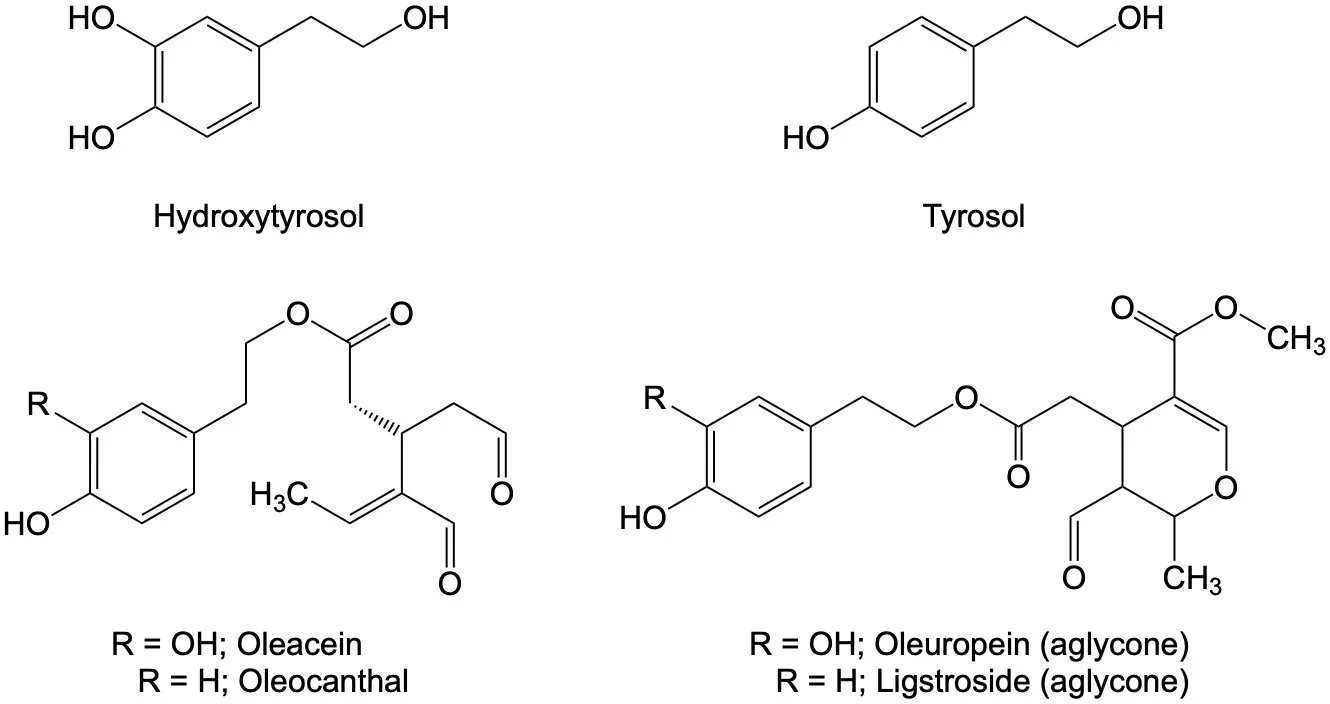
Molecular structures of the main phenolic compounds of olive oil
Extra virgin olive oil’s health halo is nothing new but the latest wave of research is moving beyond broad claims and beginning to map how its polyphenols (the compounds that make the oil peppery and bitter) actually work in the body. Scientists are now focusing less on whether these compounds are beneficial, and more on the specific pathways they influence, from gene expression to microbial metabolism. A 2025 review in Nutrients highlights that olive oil polyphenols “modulate inflammatory signaling and oxidative balance at a cellular level,” pointing to mechanisms that are far more targeted than previously understood.
In cardiovascular research, recent studies have distinguished between olive oils based on their phenolic content. A 2024 paper in Cells reports that high-polyphenol extra virgin olive oils lead to “significant improvements in lipid profile and endothelial function [refers to the inner lining of blood cells] ” compared to low-phenolic counterparts, reinforcing the idea that not all olive oils deliver the same benefits.
Gut-brain connection
Perhaps the most intriguing new frontier, however, lies in the gut. Emerging research is positioning olive oil polyphenols as key players in the microbiome, where they are transformed into metabolites with systemic effects. A 2026 human study found that regular consumption of polyphenol-rich olive oil was associated with greater gut microbial diversity and improved cognitive performance, hinting at a tangible gut–brain connection. As described in Frontiers in Nutrition (2025), these compounds may help “attenuate neuroinflammation and support neuronal function,” offering an interesting link between dietary fat quality and long-term brain health.
At the same time, the science is becoming more precise—and more cautious. Regulatory bodies like the European Food Safety Authority continue to emphasize the need for clearly defined measures to make health claims, at this stage approving only specific claims such as the protection of blood lipids from oxidative stress. The implication is not that the benefits are overstated, but that they need to be based on measurable factors (e.g. polyphenol concentration) and contextualised: the benefits are likely to vary depending on a person’s general diet and daily consumption of olive oil.